Keralamatrimonialguide
A full-stack matrimonial platform built from scratch, scaled to 3000+ active users with a multi-gateway payment system, audit trail, and a production-grade observability stack.
Overview
Keralamatrimonialguide is a matrimonial service platform I designed and built from scratch after a detailed requirements session with the client a business that had been operating manually for four years. The goal was to digitise their workflow, remove pain points their customers repeatedly faced, and build a system that could grow without requiring a rewrite.
The platform is live, actively growing, and currently handles 30,000+ page views per week with a 68% week-over-week visitor growth rate. 93% of traffic is mobile meaning every backend decision had to account for lean, fast responses on low-end Android devices over mobile data.
Platform at a Glance
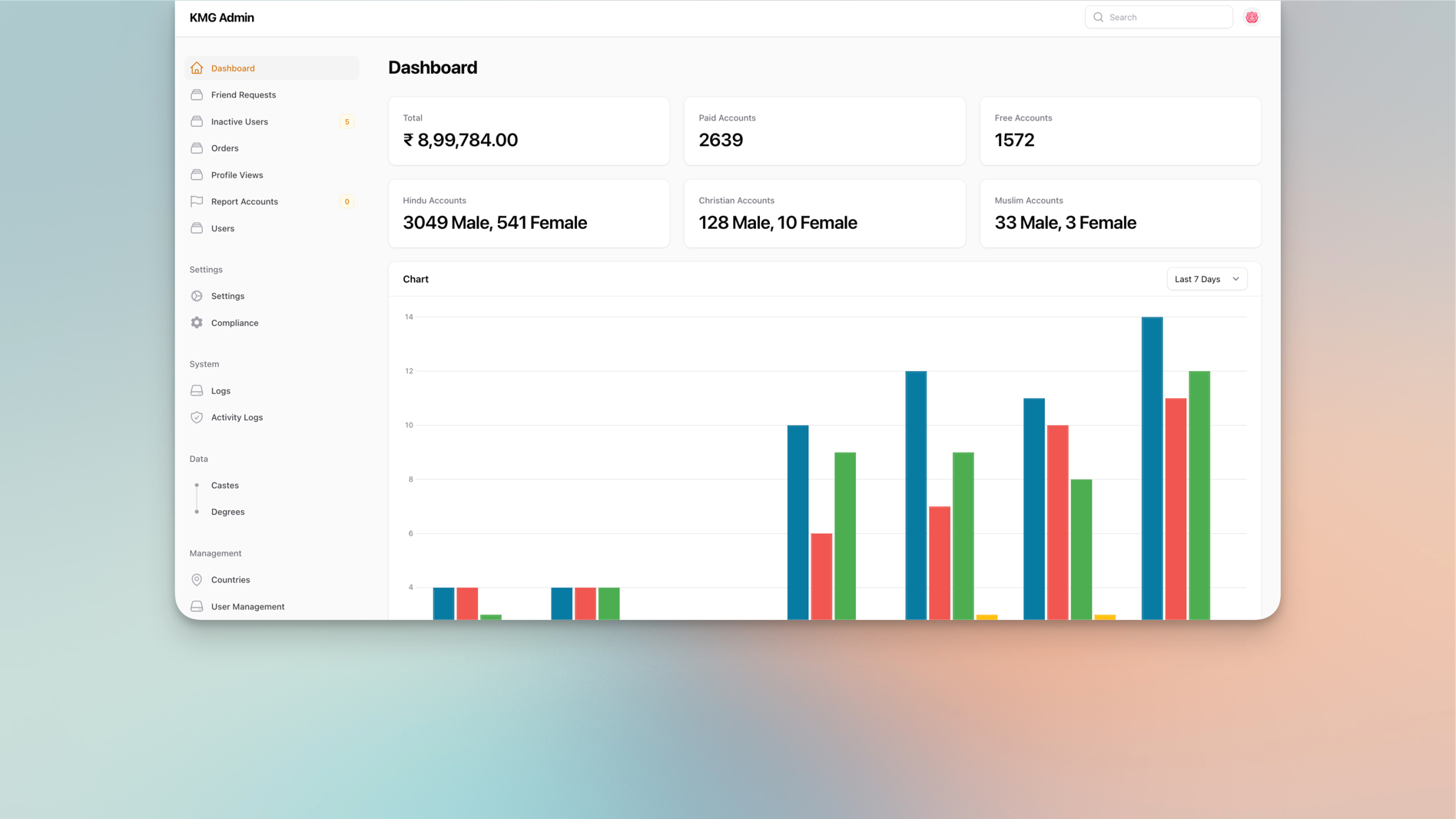
The admin dashboard gives a live view of the platform’s state ₹8,99,784 in total revenue processed, 2,639 paid accounts, and 4,200+ profiles across Hindu, Christian, and Muslim categories.
1. Schema Design with Realistic Load Simulation
Before writing a single controller, I mapped the full domain model from the client’s four years of operational experience. Every relationship user profiles, subscription tiers, interests, profile views, contact requests was planned upfront.
Crucially, I built out Seeders and Model Factories before building any feature. This let me populate the database with thousands of realistic profiles from day one of development, which exposed query performance problems at a simulated scale before they could ever reach production. Most developers skip this step and only discover slowness when real users are already affected.
I also enabled slow query logging in the application layer any query exceeding a threshold is flagged and logged, giving an early warning system before any query can become a production problem.
Result: Zero performance incidents in production. The system has scaled to 3000+ active users without a single query-related outage.
2. Tamper-Proof Audit Trail with Soft Deletes
Every meaningful user action account updates, profile edits, page-level interactions is logged with a timestamp and the context of where in the application it occurred. This isn’t just for analytics; it’s a deliberate data protection layer.
The system uses soft deletes throughout. Profile views, interest signals, and contact requests are never hard-deleted they are preserved until an admin explicitly purges a profile. Transient session activity is cleaned up automatically via a scheduled cron job (running during off-peak hours) with a 3-month retention window.
This design proved its value in production. A subscriber deleted their own account and then contacted the client demanding a refund, claiming the platform was faulty. The audit logs showed the exact timestamp of the delete action and the page it was triggered from a clear, timestamped record that resolved the dispute immediately.
Result: Zero successful fraudulent refund claims. The audit system has been the deciding factor in at least one verified dispute.
3. Resilient Payment Infrastructure with Idempotent Webhooks
The payment system supports 4 active payment gateways Razorpay as primary, with three fallbacks. Any system outside our control is treated as a potential point of failure, and a fallback exists for every one of them. Admins can switch gateways manually if needed.
Every payment flows through a dedicated webhook endpoint. The endpoint does two things: it validates the request signature (HMAC verification to confirm the ping is genuinely from the gateway) and then flips the subscription state for the corresponding order but only if that order is still in a pending state.
That last condition is the idempotency guarantee. Razorpay will re-ping a webhook endpoint if it doesn’t receive a 200 OK response. Without the status check, a retry would double-credit a user. With it, the second ping finds an already-processed order and exits immediately. The endpoint returns 200 synchronously and fast no heavy processing that could cause a timeout and trigger a false retry.
Result: Zero duplicate payment credits. Zero missed payments. The system handles Razorpay’s retry behaviour correctly by design.
4. Production Observability Stack
Running a live platform for a paying customer requires knowing when things break before the customer does.
The stack includes Flare for real-time exception monitoring, slow SQL query logging at the application layer, Umami for self-hosted privacy-friendly traffic analytics, and all background jobs scheduled during off-peak hours to avoid competing with user traffic.
The traffic data below also drove product decisions directly:
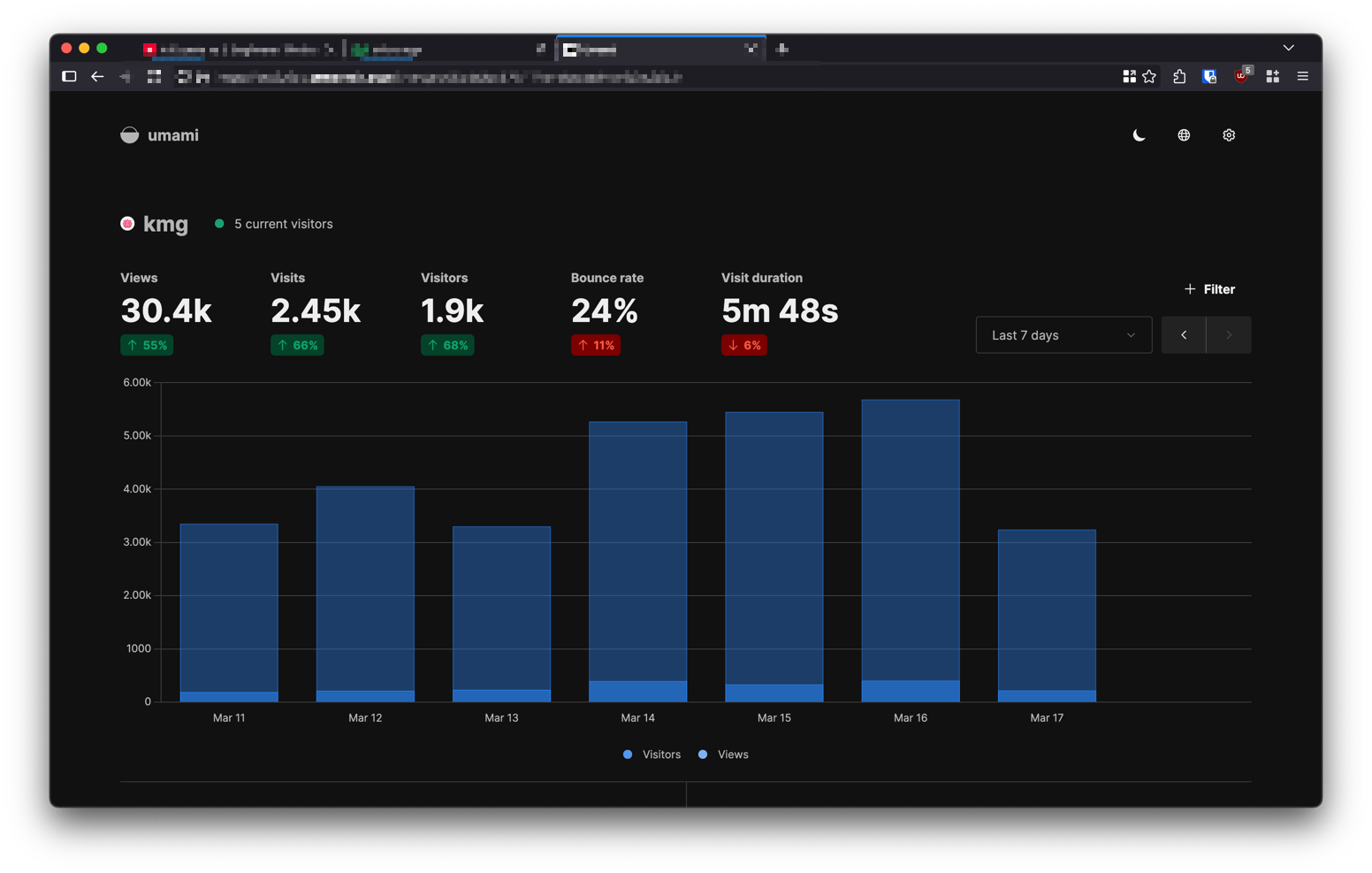
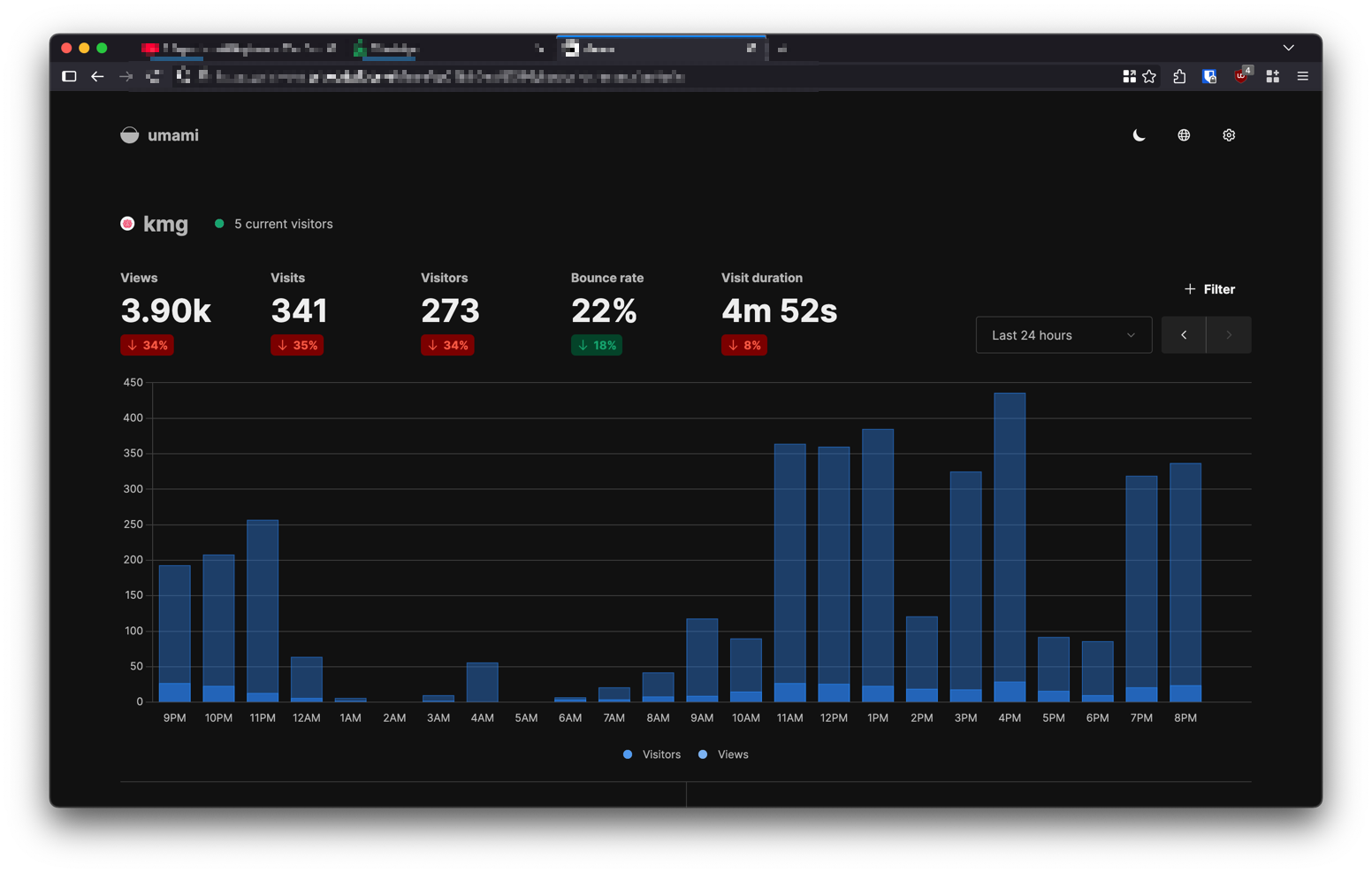
Seeing that /search accounts for 55% of all page views made it clear that the filtering backend not the homepage is the product’s core, and that’s where engineering effort has been prioritised.

Key numbers visible here:
/search13,200 views (55% of all traffic)- 93% mobile, 90% Android the backend must serve lean, fast responses
- 5m 48s average session deep user engagement, not casual browsing
- 99% direct traffic a highly retained, returning user base
Result: Issues are caught and resolved proactively. The platform has maintained consistent uptime with no user-reported performance degradation.
5. Scalable Search Architecture with a Clear Growth Roadmap
Search is the heart of the product users filter profiles by age (date of birth range), caste, religion, and marital status. The query is built using a dedicated Eloquent query scope that composes these filters cleanly, keeping the controller thin and the filtering logic testable and reusable.
Indexes are in place on the most-used filter columns dob, caste, religion, and marital_status. Infinite scroll is handled with server-side pagination, avoiding the client needing to load all profiles upfront.
The current architecture is designed to serve up to ~10,000 profiles efficiently. Beyond that, two known limitations kick in: OFFSET-based pagination becomes expensive as users scroll deeper, and single-column indexes stop being effective when multiple filters combine. The planned solution already scoped is a read replica for all search queries and a migration to cursor-based pagination with composite indexes on the most common filter combinations.
Result: Search performs fast at current scale. The scaling ceiling is known, documented, and has a concrete solution already designed.
What’s Next
- Algorithmic profile matching ranking profiles by compatibility score rather than just filtering
- Weekly digest notifications a queue-driven system that batches and sends each subscriber a curated list of new profiles matching their preferences
- Ticketing system structured support workflow for the admin team
- PWA push notifications already in progress, enabling native-like re-engagement on Android